Compact BESS Battery Handling Equipment for Retrofit Installation Sites

A representative SINOLIFT case for moving and positioning energy storage battery modules inside an existing electrical room where access, turning space, and cabinet approach are limited.
Battery energy storage projects are not always built in an open factory bay. Many systems are installed in converted plant rooms, utility areas, workshops, or commercial buildings where doorways are narrow and cabinets sit close to walls. In these locations, the handling problem is not long-distance transport. It is the last few meters: bringing a heavy module through the access route, turning in limited space, matching the cabinet slot, and completing the transfer without striking the housing or exposing operators to an uncontrolled lift.
This representative case shows how compact BESS battery handling equipment can be customized for retrofit work. The emphasis is on access and positioning rather than high travel speed.
The Retrofit Installation Challenge
A service contractor needed a repeatable method for installing rack-mounted battery modules in an existing electrical room. A standard forklift could reach the building but could not work safely inside the final aisle. A pallet truck could move packaged modules to the room, yet it could not raise an individual module to every cabinet level. Relying on several technicians to lift and hold the module during alignment would create avoidable strain and make the transfer harder to control.
The room also imposed equipment limits: a tight doorway, a short turning area, a finished floor, and minimal clearance in front of the cabinet. The tool therefore had to be narrow, easy to steer at low speed, stable while parked, and capable of presenting the module close to the rack face.
The SINOLIFT Solution Concept
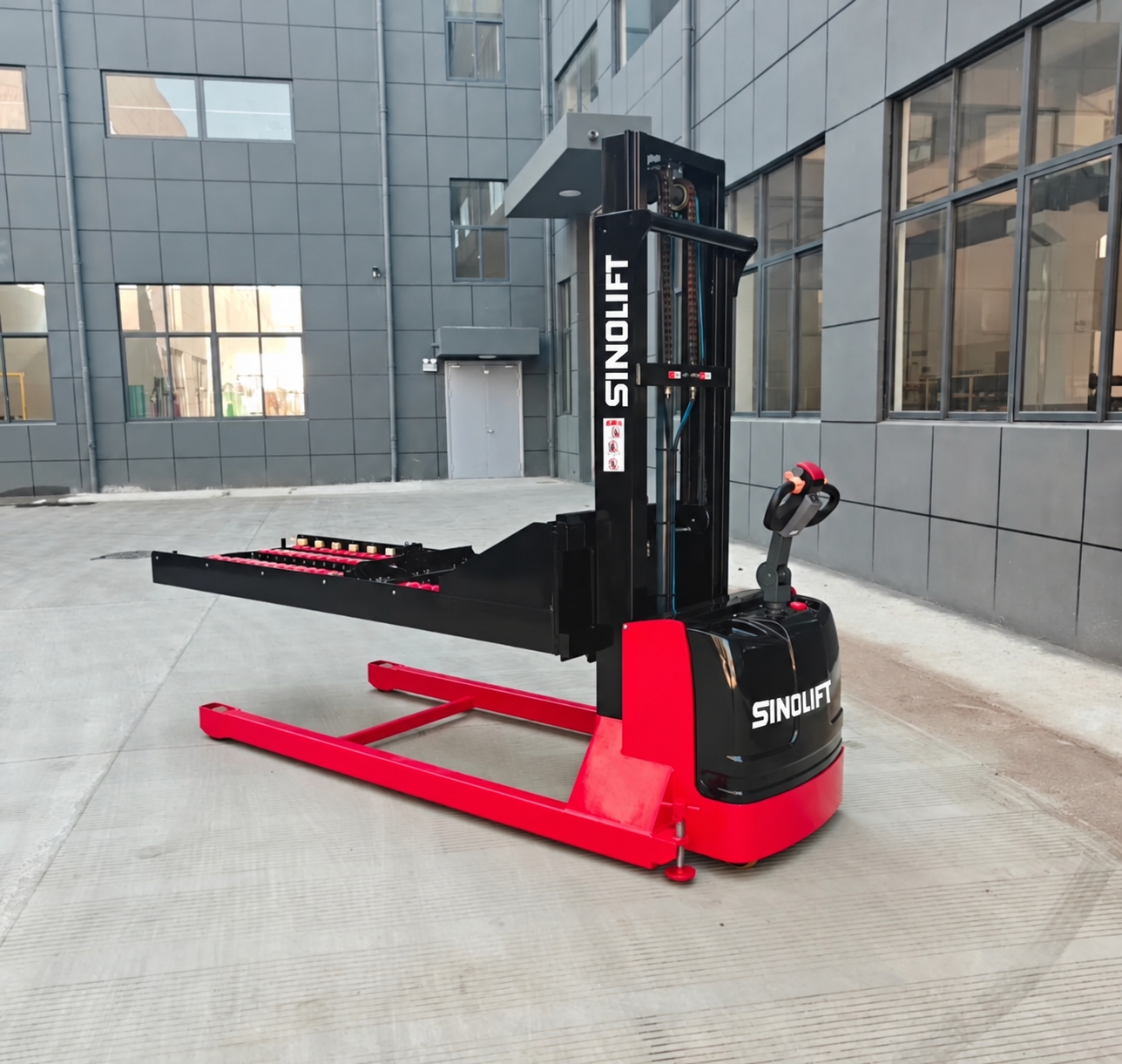
SINOLIFT would begin with a route survey and dimensioned drawings. The battery weight and center of gravity define the load case, while the doorway, turning path, lowest and highest cabinet rails, and approach clearance define the machine envelope. From that information, the team can select a compact pedestrian-controlled base and engineer the load interface around the approved battery support points.
Compact Mobile Base
The chassis width, wheel arrangement, and handle position are designed for the measured route. Non-marking wheels can be considered for finished indoor floors, while wheel diameter must still accommodate joints and thresholds. A parking brake holds the unit during cabinet transfer; travel with a raised load is limited by the final operating instructions.
Electric Lift With Controlled Lowering
An electric hydraulic lift removes repeated manual pumping and lets the operator approach the slot gradually. The required lift range is set from the actual cabinet rail heights, not from a generic catalog value. The rated configuration must include the platform, fixture, load center, and any reach needed at the cabinet.
Guided Module Support
A battery-specific tray can use stops, guides, rollers, or a sliding element according to the approved module drawing. The purpose is to keep the housing supported and aligned while avoiding terminals, connectors, ventilation openings, and cosmetic surfaces. A positive restraint secures the module during movement and is released only after the trolley is parked and aligned.
How the Installation Sequence Works
- Stage the packaged modules near the work area and inspect them according to the battery manufacturer's procedure.
- Place one module on the trolley's approved support fixture and engage the restraint.
- Move through the surveyed route with the module in the specified transport position.
- Approach the secured cabinet, apply the brake, and raise the platform to the selected rail height.
- Use the guides or fine adjustment feature to establish alignment, then transfer and fasten the module in the prescribed sequence.
- Withdraw the empty tray, lower the platform, and repeat only after the route and equipment are clear.
This process separates transport, positioning, and electrical work. Qualified personnel still control isolation, PPE, grounding, cabling, torque, and commissioning. The handling equipment supports the load; it does not replace the ESS manufacturer's installation manual.
Why Purpose Built Equipment Matters
OSHA recommends mechanical assistance for heavy items and highlights the risks created by weight, awkward posture, reach, and repeated lifting. ESS manuals reinforce the same practical point. Huawei documents a 68 kg energy storage module and instructs users to move it with secured lifting handles, while GivEnergy identifies a 76 kg battery pack and calls for suitably rated lifting equipment. The exact module in any project may differ, but the engineering decision should always follow the real load and task.
Purpose-built BESS battery handling equipment provides a defined support surface, lift range, restraint, parking method, and transfer path. That is more valuable than simply selecting a machine with a capacity number greater than the module weight. The load center, elevated stability, attachment weight, approach distance, and floor all influence the safe rated configuration.
Information to Send for a Custom Quote
- Battery drawing, weight, center of gravity, orientation limits, and approved contact surfaces.
- Cabinet drawing, slot heights, rail spacing, door opening, threshold, and fastening sequence.
- Doorway and aisle dimensions, turning area, floor type, gradients, joints, and travel distance.
- Required power source, local voltage, duty cycle, indoor conditions, ESD policy, and destination market.
- Photographs or video showing the complete route from staging point to cabinet.
If several battery or cabinet models are involved, provide a model matrix. SINOLIFT can then evaluate adjustable guides or interchangeable fixtures and identify the worst-case combination before finalizing the design.
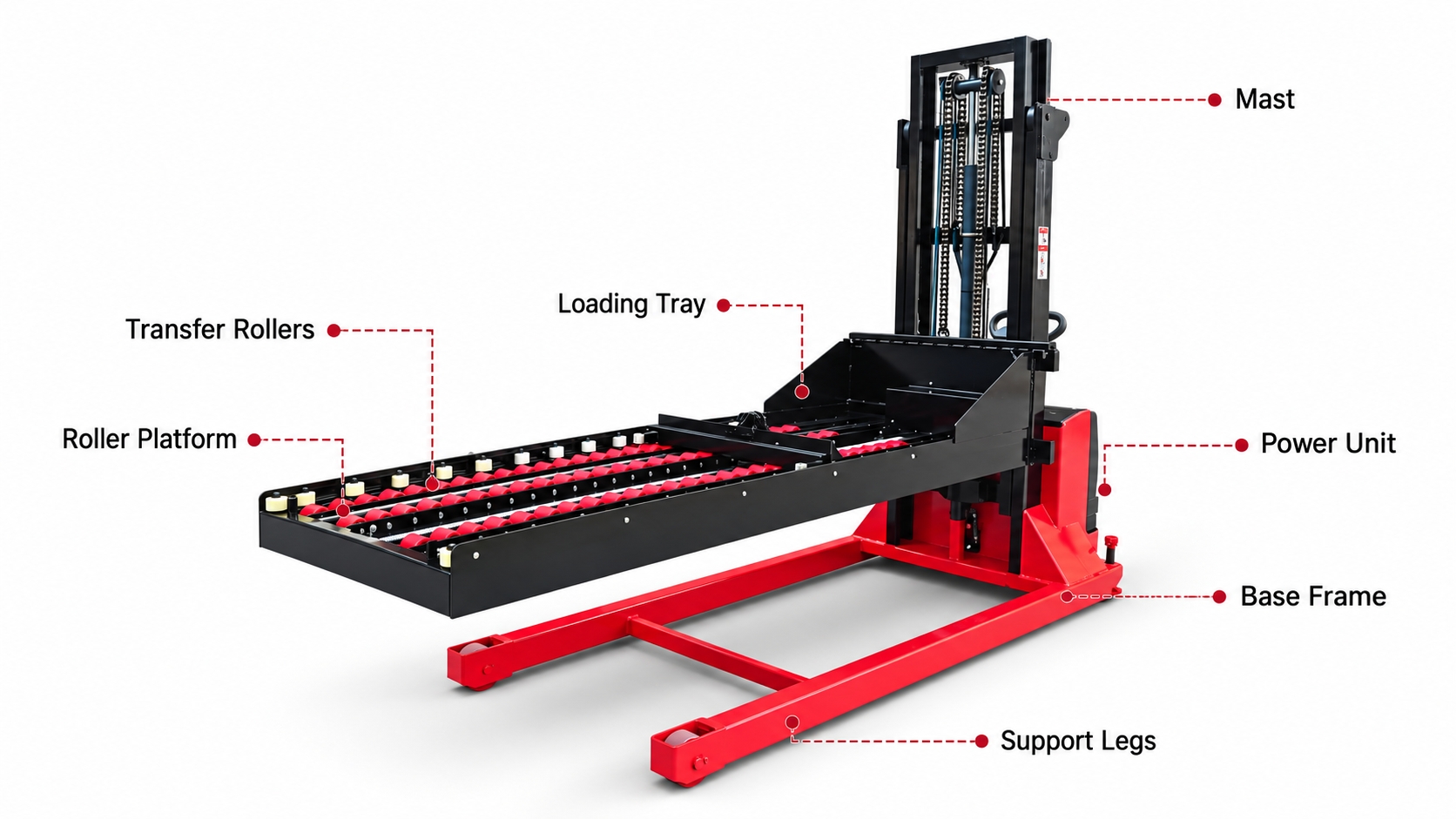
SINOLIFT Custom Material Handling Capability
Shanghai SINOLIFT Mechanical and Electrical Equipment Co Ltd manufactures pallet trucks, stackers, forklifts, lift tables, aerial work platforms, drum handling equipment, stainless-steel products, and other material handling solutions. That broad foundation supports custom projects where standard machines require a different chassis, platform, lift range, restraint, control system, or finish.
For retrofit energy storage work, the best solution is the one that fits the entire route and cabinet interface. Send the module drawing, cabinet details, site measurements, and workflow to SINOLIFT. The engineering team can review the application and prepare a custom BESS battery handling equipment proposal tied to the approved technical specification.
Frequently Asked Questions
What equipment is used to install battery modules in a BESS cabinet
Depending on the module and site, installers may use a purpose-built lifting trolley, pedestrian stacker with a custom tray, lift table, or manufacturer-specified installation kit. The correct choice must match the load, slot heights, access route, and transfer method.
Can a standard stacker be used
Only after confirming that its chassis, forks or platform, load center, lift range, stability, and cabinet approach suit the task. A custom fixture is often needed to support and guide the module correctly.
What is the most important site measurement
No single measurement is enough. Doorway width, turning space, cabinet approach clearance, minimum and maximum rail heights, floor condition, and route gradients must be assessed together.
Professional Sources and Content Benchmarks
These sources support the technical context and editorial positioning. Confirm the final machine specification, risk assessment, and local compliance requirements against the approved project drawing and destination-market rules.
- Huawei LUNA2000 S1 User Manual - Official heavy-module handling example and installation context.
- GivEnergy SME Battery Cabinet Installation Manual - Official module weight and lifting-equipment example.
- OSHA Materials Handling Heavy Lifting - Mechanical-assistance and ergonomic handling guidance.
- AlphaESS Storion Installation Manual - Professional reference for cabinet module sequence and securing steps.
- IEC 62485 5 2020 - Stationary lithium-ion battery installation safety context.
- Combilift BESS Handling Solutions - Search and category language benchmark for BESS handling equipment.

How Does an Electric Self Lifting Stacker Work for Trucks and Vans