Different Types of Forklifts


Depending on the nature of your job and your specific height and weight requirements, there is a wide array of forklifts available for you to choose from. At SINOLIFT, we offer a vast selection of high-quality forklifts to ensure that you always find the perfect fit for your specific needs. Here's a breakdown of the most common forklift types and how they can be best utilized.
Warehouse forklift: This type of forklift is designed specifically for indoor storage environments, such as warehouses or factories, and is perfect for lifting smaller, palletized loads. It features cushioned tires, making it ideal for use on flat and smooth surfaces like concrete, and boasts a smaller turning radius, which helps it easily navigate through tight spaces.
Side loader: A side loader is built to handle long loads by loading from the side, as opposed to from the front. The operator's cab is located on one side of the machine, with the bed or platform beside it, allowing it to easily carry long or strangely shaped objects.
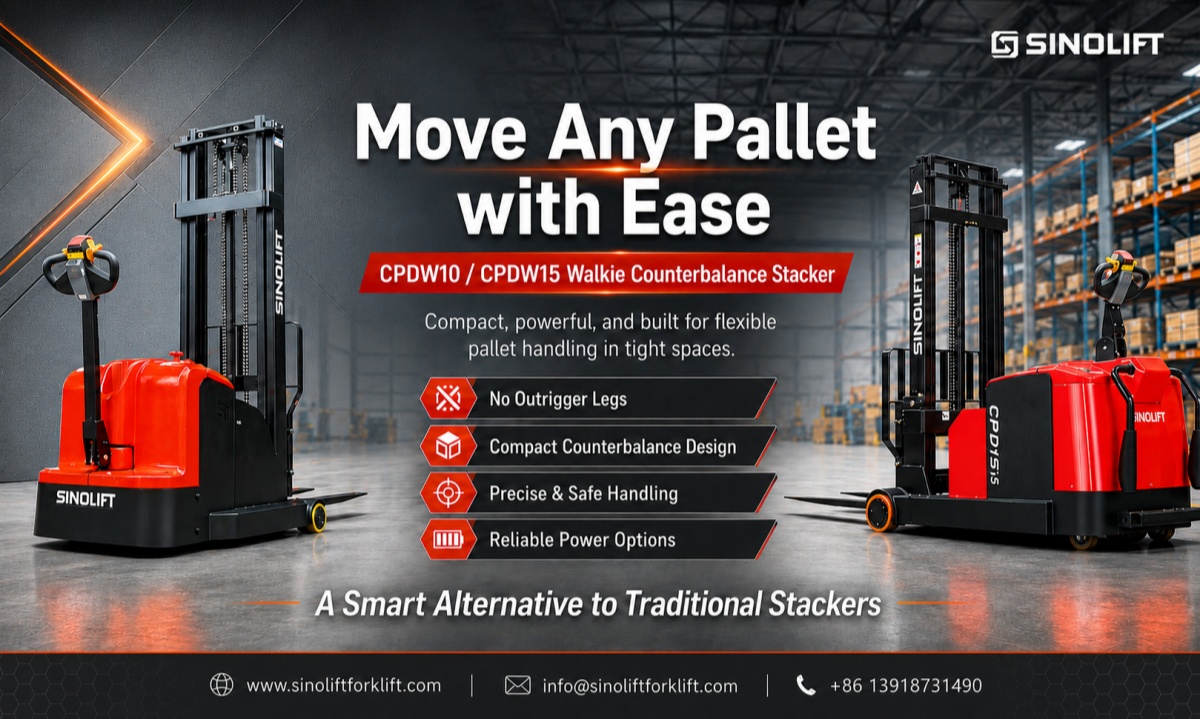
Counterbalance forklift: With a weight at the rear of the truck to offset the weight of the load in front, this type of forklift is capable of safely lifting large and heavy loads. It's often utilized in warehouse and distribution applications.
Telehandler: Primarily used for lighter loads and shorter elevations, a telehandler (or telescopic handler) features an arm that can be extended to reach higher lift heights. Although it has a lighter carrying capacity of around 5,000 lbs, it can be used indoors and outdoors.
Heavy-duty forklift: Designed for transporting extremely heavy loads, a heavy-duty forklift features pneumatic tires for optimal traction and grip, allowing it to maintain stability and navigate through different types of terrain. It's mostly used in industrial applications.
Rough-terrain forklift: Perfect for construction work, a rough-terrain forklift is designed with special tires to ensure stability over difficult terrains, such as loose ground and rocky areas.
Reach fork truck: Narrow aisle applications, such as those typically found in warehouses or distribution centers, often require the use of a reach fork truck. Its unique mechanism features horizontally extending forks, allowing it to access areas that a typical forklift may not be able to.
Warehouse forklift: This type of forklift is designed specifically for indoor storage environments, such as warehouses or factories, and is perfect for lifting smaller, palletized loads. It features cushioned tires, making it ideal for use on flat and smooth surfaces like concrete, and boasts a smaller turning radius, which helps it easily navigate through tight spaces.
Side loader: A side loader is built to handle long loads by loading from the side, as opposed to from the front. The operator's cab is located on one side of the machine, with the bed or platform beside it, allowing it to easily carry long or strangely shaped objects.
Counterbalance forklift: With a weight at the rear of the truck to offset the weight of the load in front, this type of forklift is capable of safely lifting large and heavy loads. It's often utilized in warehouse and distribution applications.
Telehandler: Primarily used for lighter loads and shorter elevations, a telehandler (or telescopic handler) features an arm that can be extended to reach higher lift heights. Although it has a lighter carrying capacity of around 5,000 lbs, it can be used indoors and outdoors.
Heavy-duty forklift: Designed for transporting extremely heavy loads, a heavy-duty forklift features pneumatic tires for optimal traction and grip, allowing it to maintain stability and navigate through different types of terrain. It's mostly used in industrial applications.
Rough-terrain forklift: Perfect for construction work, a rough-terrain forklift is designed with special tires to ensure stability over difficult terrains, such as loose ground and rocky areas.
Reach fork truck: Narrow aisle applications, such as those typically found in warehouses or distribution centers, often require the use of a reach fork truck. Its unique mechanism features horizontally extending forks, allowing it to access areas that a typical forklift may not be able to.
Enhancing Common Sense and Knowledge Capacity Can Prevent Pallet Failure
The Parts of a Forklift & Their Functions