The 5 Must-See Parameters for Choosing a Reel Hydraulic Stacker: A Deep Dive from Load Capacity to "No-Mark" Design
Handling heavy rolls of film, paper, or foil is a daily challenge in industries like printing and flexible packaging. These items are often dense, awkward to grip, and incredibly easy to damage if dropped. For facility managers and safety officers, finding the right equipment isn't just about moving weight; it’s about precision, floor protection, and operator ergonomics.
If you are currently evaluating how to streamline your material handling, you have likely come across the "Roll and Reel Hydraulic Stacker." But how do you distinguish a high-quality machine from one that will fail after six months of heavy use?
This guide breaks down everything you need to know about these essential tools and the five specific parameters that should dictate your purchasing decision.
Understanding the Mechanics: What is a Hydraulic Stacker?
Before diving into the technical specifications, it is important to understand what these machines actually do. At its core, a hydraulic stacker is a lifting device designed to transport and elevate loads using fluid power.
The typical anatomy includes a vertical mast, a platform or fork attachment, and a hydraulic cylinder. This cylinder is the "heart" of the machine. It is connected to a pump operated by a manual handle or a foot pedal. When the operator pumps the handle, the hydraulic fluid is pressurized. This pressure moves the cylinder upward, which in turn raises the load.
While there are semi-electric and fully electric versions available, manual hydraulic stackers remain a favorite for many warehouses. They are cost-effective, require very little maintenance, and do not need a charging station. For tasks involving "Roll and Reel" handling, these manual units offer a level of "feel" and control that is often necessary when positioning expensive materials onto a printing press or a packaging line.
1. Load Capacity: Calculating the Safety Margin
The first parameter any buyer looks at is load capacity. However, "capacity" is more than just a number on a spec sheet. In the world of reel handling, the center of gravity is critical.
Most standard roll and reel hydraulic stackers are rated for specific weights, often around 600kg. This is usually sufficient for the majority of film and paper rolls used in mid-sized printing operations.
When choosing your stacker, do not buy a machine that exactly matches your heaviest load. If your heaviest reel is 600kg, you are pushing the machine to its absolute limit every time you use it. This puts unnecessary stress on the hydraulic seals and the frame. Always aim for a machine where your average load is about 70-80% of the total rated capacity to ensure longevity and operator safety.
2. The Lift Height vs. The "Collapsed" Height
Vertical space is often the most ignored factor until the machine arrives at the warehouse. You must consider two different measurements:
- Maximum Platform Height: This is how high the reel can go. If you need to load a reel onto a spindle that sits 1400mm off the ground, a stacker with a 1200mm limit is useless.
- Overall Height (Collapsed): Can the stacker fit through your doors? If your facility has low-clearance entryways or mezzanine levels, you need to ensure the mast of the stacker can pass through without hitting the frame.
Choosing between a 1200mm lift and a 1500mm lift might seem like a small detail, but it changes the entire footprint and center of gravity of the machine.
3. The Interface: Why V-Shaped Platforms Matter
Standard forklifts use flat forks. While these are great for pallets, they are dangerous for cylindrical rolls. A round reel on a flat fork is a recipe for a "roll-off" accident.
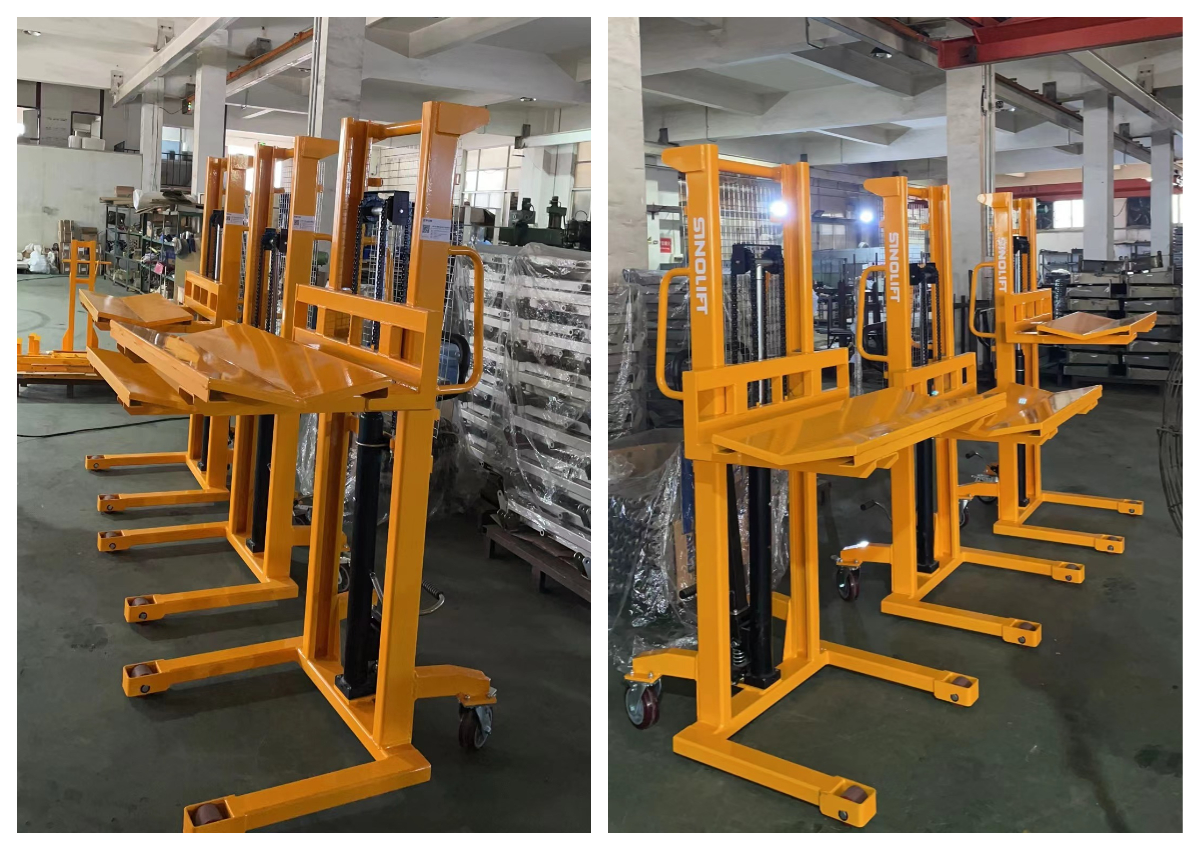
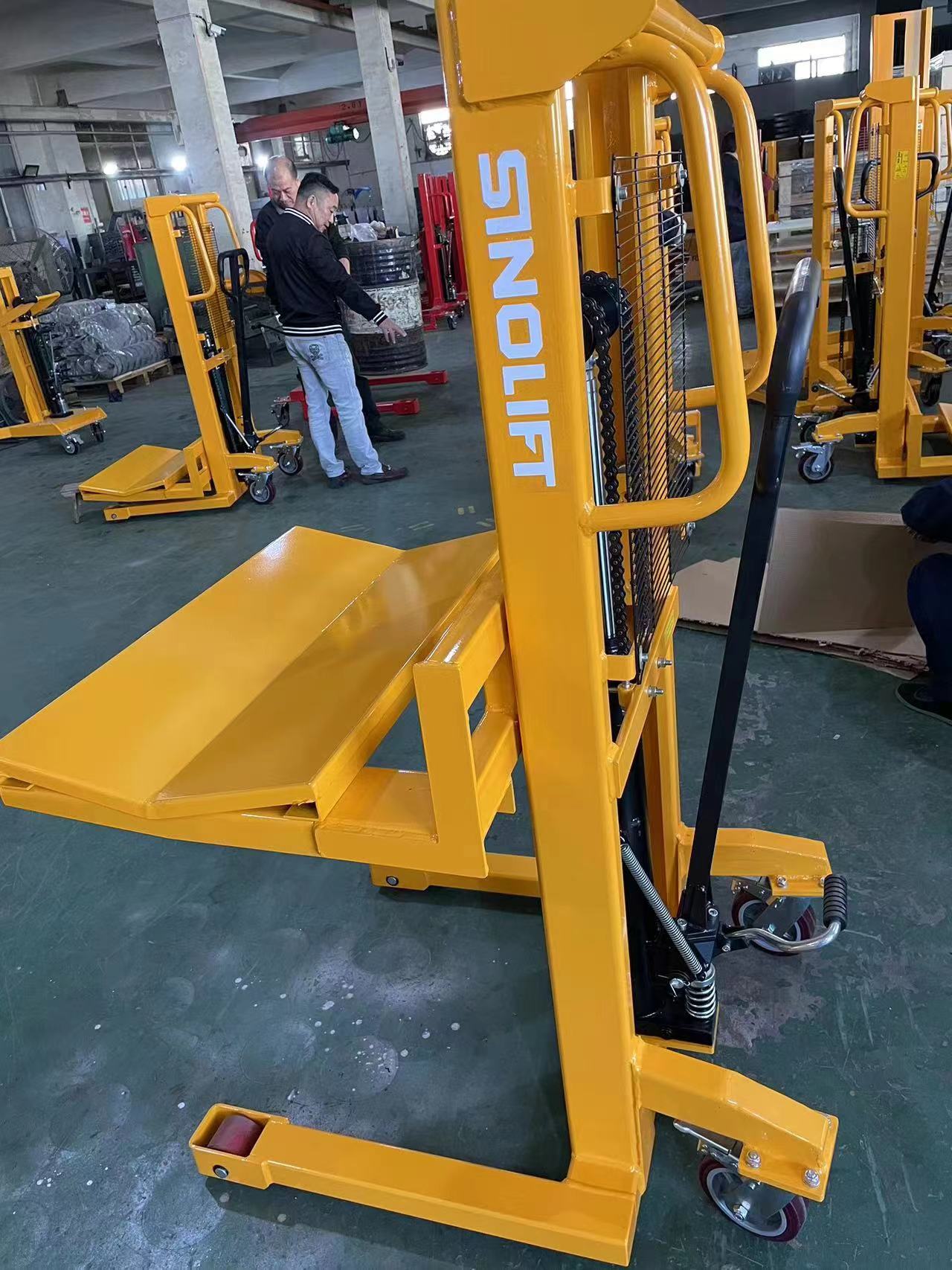
A dedicated roll and reel hydraulic stacker uses a V-shaped platform. This design cradles the cylinder, keeping it centered and stable during transit. When evaluating this parameter, look at the dimensions of the V-plate. It needs to be wide enough to support the diameter of your reels without the edges of the plate digging into the material.
In the flexible packaging industry, where thin films are easily punctured, the smoothness and contour of this V-plate are just as important as the lift capacity.
4. Mobility and the "No-Mark" Floor Mandate
A stacker is only as good as its wheels. Because these machines are often used in "cleaner" environments like printing shops or pharmaceutical packaging areas, floor protection is a high priority.
Look for stackers equipped with Polyurethane (PU) rollers. Polyurethane is the "Goldilocks" of wheel materials: it is harder than rubber (so it doesn't flatten under heavy loads) but softer than nylon (so it won't crack or scratch expensive epoxy floors).
The term "No-Mark" castor is a specific industry standard you should insist on. These castors ensure that as the operator maneuvers a 600kg load, they aren't leaving black streaks or gouges across the warehouse floor. Furthermore, high-quality rollers with precision bearings make the "effortless movement" promise a reality, reducing the physical strain on the operator.
5. Build Integrity: The "Hard Chrome" Advantage
The environment of a packaging plant can be tough. Constant use can lead to rust, chips in paint, and hydraulic failure. This is where the construction material of the mast and frame becomes the deciding factor in your Return on Investment (ROI).
A hard chromium-plated frame is the gold standard for these machines. Chrome plating provides a surface that is incredibly resistant to corrosion and mechanical wear. More importantly, a chromed cylinder stays smooth, which prevents the hydraulic seals from tearing. If you choose a cheaper, painted frame, the paint will eventually flake off, potentially contaminating your production area or causing the hydraulics to leak.
Precision Solutions: The Sinolift PFV Series
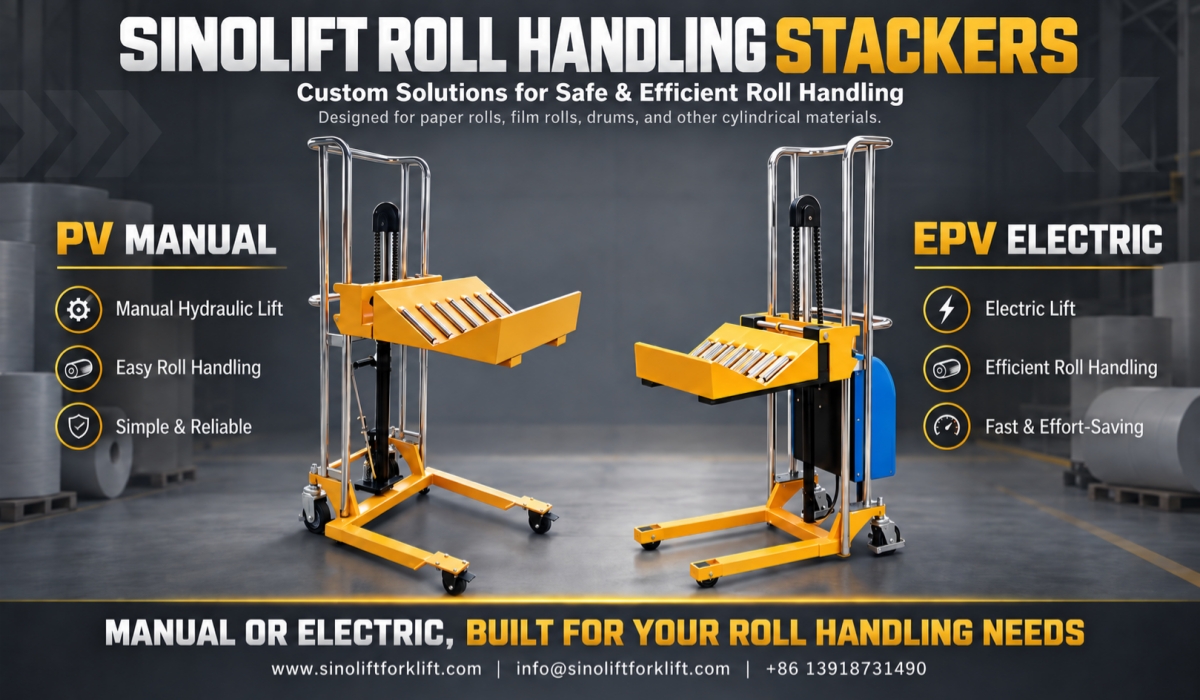
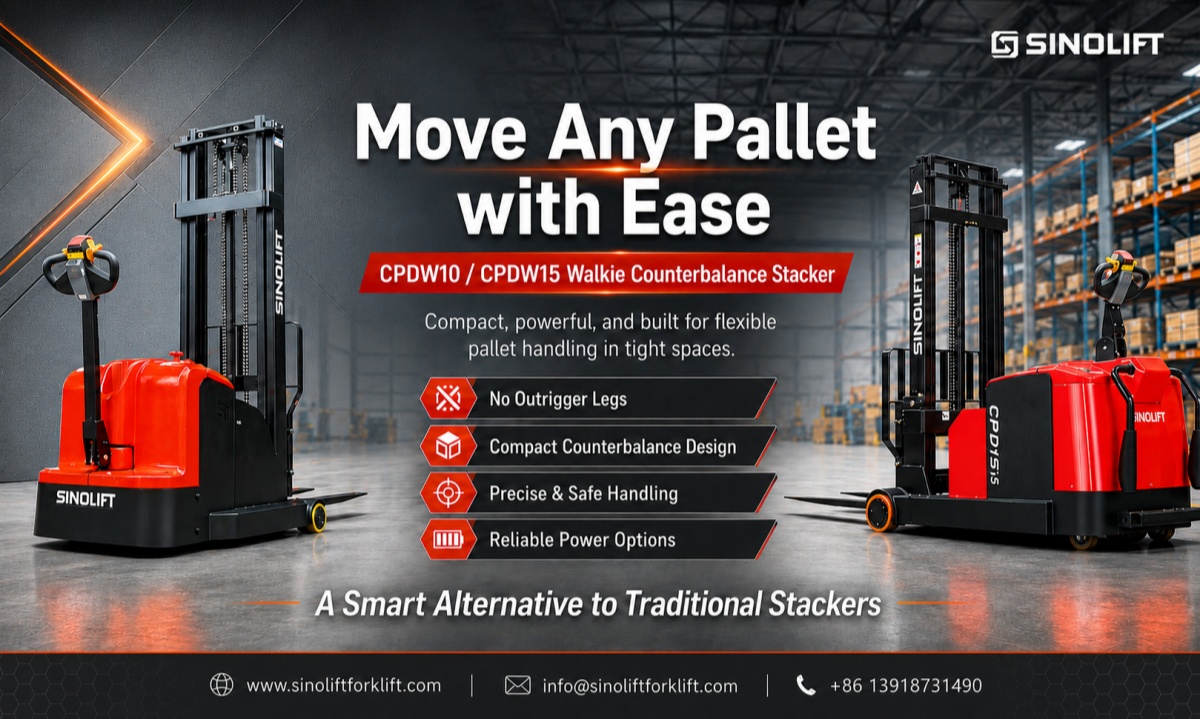
When it comes to the specific parameters mentioned above, the Sinolift PFV series is designed to meet the rigorous demands of the printing and flexible package industries. These are not general-purpose lifts; they are specialized tools for handling rolls with precision.
The PFV6120 and PFV6150 Roll and Reel Hydraulic Stackers are built with a robust construction and the "No-Mark" castor design as standard. They feature a specialized V-shaped plate specifically engineered for printing work and flexible packaging.
Technical Specifications for the PFV Series
|
Feature |
PFV6120 |
PFV6150 |
|
Capacity |
600 kg |
600 kg |
|
Max. Platform Height |
1200 mm |
1500 mm |
|
Overall Height |
1500 mm |
1800 mm |
|
Overall Length |
1500 mm |
1500 mm |
|
V-type Platform Size |
700 * 460 mm |
700 * 460 mm |
|
Net Weight |
115 kg |
125 kg |
Both models share a common width of 760mm, allowing them to navigate narrow aisles easily. The hard chromium-plated frame ensures that these units remain rust-free and functional even in high-output environments. Whether you need the more compact 1200mm lift or the extended reach of the 1500mm model, the PFV series provides the "effortless movement" that modern operators require.
By focusing on these five parameters—capacity, height, platform shape, wheel material, and frame plating—you can move beyond basic equipment and invest in a tool that truly supports your production flow.
Would you like me to help you compare the PFV series against other specialized attachments for your specific roll diameters?
For professional product selection guidance or technical support, our expert team is at your service:
Contact Information:
✉ Email: shanghai@sinoliftcorp.com
☎ Phone/WhatsApp: +86 13918731490
We provide:
• Customized equipment recommendations
• Detailed product specifications
• On-site technical consultation
• After-sales support
Get your tailored material handling solution today!
Beyond the Forklift: The Specialized Handling Solution for Lithium Battery Electrode Rolls
Solving the Logistical Puzzle: A Guide to Efficient Media Roll Management