Guide to Electric Roll Handlers: Protecting Copper & Aluminum Foils in Lithium Battery Manufacturing
The High Stakes of Battery Material Handling
The lithium-ion battery industry moves at incredible speed. Production lines operate continuously. Output demands are constantly breaking new records. At the heart of this high-speed manufacturing are raw materials that are both extremely heavy and incredibly fragile. Copper foils, aluminum foils, and separator films are the lifeblood of battery cells. They are also among the most expensive components in the facility.
Moving these massive rolls is a daily operational challenge. You cannot afford mistakes. A single dropped roll costs thousands of dollars in ruined material. Even a minor bump can scratch the foil. This renders entire sections unusable. To protect your materials and your workers, you need the right tools. You cannot rely on generic warehouse forklifts. You need specialized equipment. This is where a dedicated electric roll handler becomes an indispensable asset.
Choosing the right equipment dictates the efficiency of your entire coating line. It affects scrap rates. It impacts worker safety. This guide will walk you through the essential factors to consider when selecting an electric roll handler for high-value manufacturing environments.
The Physics of Foil Damage: Why Telescoping Occurs
To understand what equipment you need, you must first understand how damage happens. The most common issue in foil handling is "telescoping." This occurs when the inner layers of a roll slide outward. The roll begins to look like an extended telescope.
Why does this happen? It comes down to friction and inertia. Standard warehouse lifters often use smooth metal boom attachments. An operator drives the smooth metal rod into the paper or plastic core of the roll. They lift the load. It seems simple enough.
However, metal resting against cardboard or smooth plastic provides very little friction. When the equipment turns a corner, inertia takes over. The heavy roll wants to keep moving in a straight line. The smooth shaft cannot grip the core. The roll slides forward or backward on the shaft. This internal sliding forces the layers of foil to shift.
Telescoping destroys the alignment of the roll. It causes microscopic scratches on the sensitive coating surfaces. It also creates a severe safety hazard, as a shifting load can unbalance the equipment. To solve this, the industry had to rethink how the machine grips the load.
The Equipment Matchup: Standard Rams vs. Expanding Shafts
When evaluating a reel lifter, the most critical component is the shaft itself. Buyers typically choose between two main designs.
The Standard Smooth Ram
A standard single ram is exactly what it sounds like. It is a solid, smooth steel pole. For many basic industries, this is perfectly adequate. If you are moving rolls of carpet, cheap paper, or thick rubber, a smooth ram works well. These materials are not highly sensitive to internal friction. The standard ram is inexpensive and easy to maintain.
However, it is the wrong choice for lithium battery manufacturing. A smooth ram simply cannot secure heavy, slippery metallic foils.
The Expanding Shaft Solution
High-value environments require an expanding shaft. This is often referred to as a pneumatic or mechanical expanding shaft. It fundamentally changes how the machine interacts with the material.
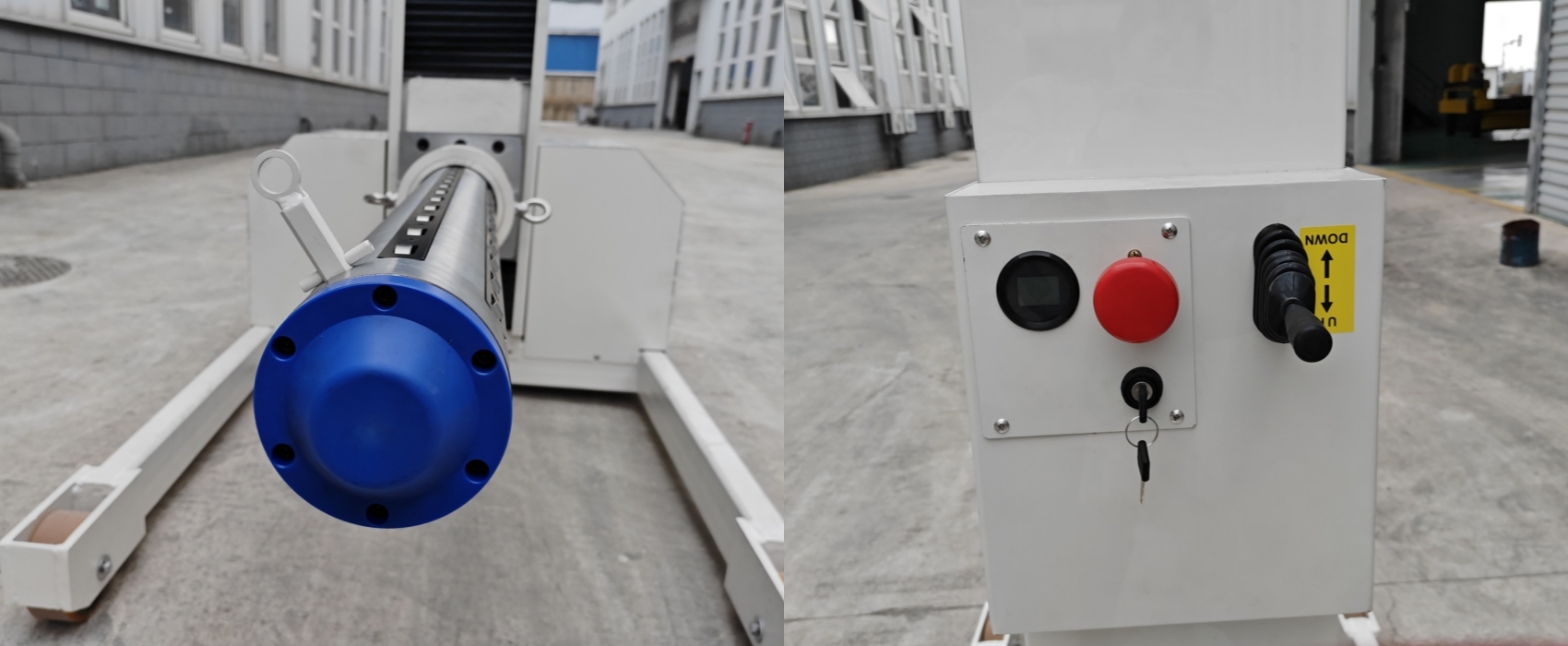
The operator inserts the expanding shaft into the core just like a standard ram. Once fully inserted, the mechanism activates. Air pressure or mechanical linkages force gripping elements to expand outward from the shaft. These elements bite securely into the inner walls of the roll's core.
The expanding shaft locks the roll in place. The machine and the material effectively become a single, solid unit. There is zero sliding. There is zero internal friction. This mechanism guarantees 100% damage-free transport. For copper and aluminum foils, an expanding shaft is not a luxury. It is an absolute operational necessity.
Structural Integrity: The Necessity of Thickened Support
Rolls of copper and aluminum have a deceptive physical footprint. They do not look particularly massive. However, their density is extreme. A relatively compact roll of battery foil can easily weigh up to 1,000 kilograms.
This extreme weight places massive stress on the lifting equipment. A thin or poorly engineered shaft will bow under the load. A bending shaft creates an inclined slope. Gravity will then pull the roll toward the tip, risking a catastrophic drop. Furthermore, a bent shaft makes it impossible to align the roll with the coating machine.
To combat this, a high-quality electric roll handler features a thickened structural design. The shaft must offer exceptional bending resistance. A thickened boom provides a 1.0-ton weight capacity without deflecting. This robust design also matches the large inner cores standard in industrial production, seamlessly fitting 3-inch, 6-inch, or even larger customized paper and plastic cores. Stability at the core translates to stability during transport.
Precision Docking at the Coating Machine
Transporting the material across the warehouse is only the first step. The true test of an electric roll handler is how it delivers the material to the production line. In battery manufacturing, rolls must be loaded onto coating machines, slitters, and roller presses.
This docking process requires extreme precision. The spindle of the coating machine must align perfectly with the core of the roll. Manual pushing and pulling at this stage is dangerous and exhausting.
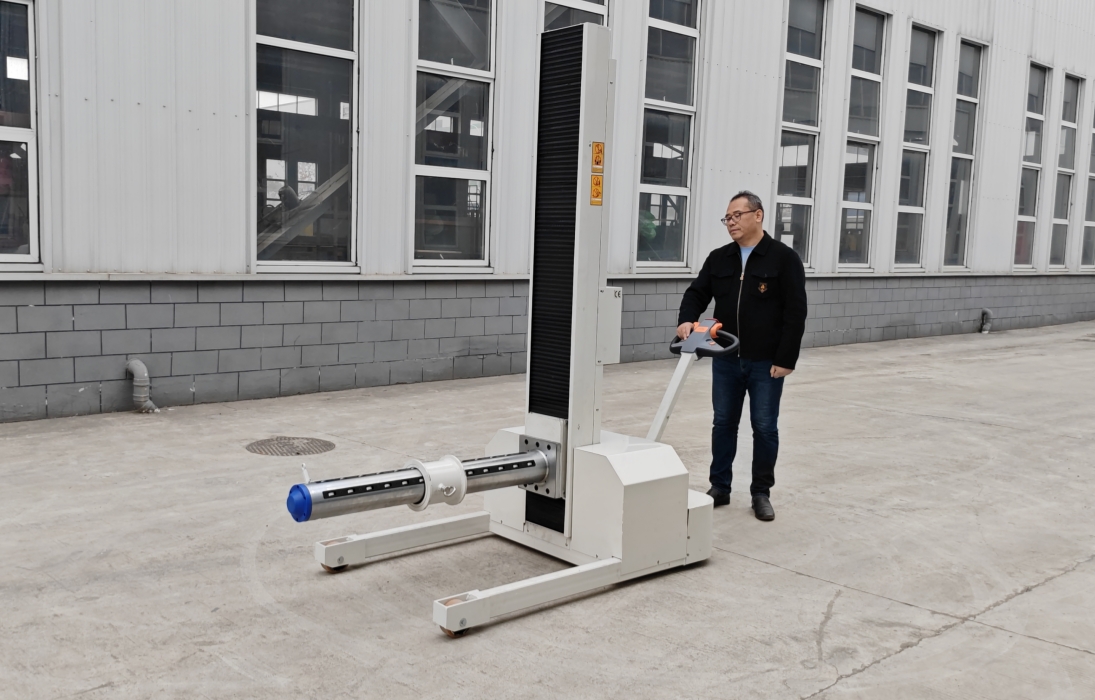
Modern equipment utilizes an electric push-off mechanism. This is a game-changing feature. The operator drives the equipment to the machine. They align the heights using the electric lift. Then, they activate a smooth hydraulic push-pull system. A robust backplate gently and precisely pushes the roll off the shaft and onto the machine's spindle. The movement is controlled down to the millimeter. This ensures a stable, highly accurate transfer that eliminates heavy manual labor and protects the material.
Advanced Safeguards for High-Volume Production
Moving a one-ton roll of metal foil through a busy factory requires advanced safety protocols. The best equipment integrates intelligent features to protect the load and the personnel.
Look for systems that feature auto-centering technology. Axial and radial auto-centering ensures the roll is perfectly positioned before transport begins. This boosts overall production efficiency.
Anti-tilt baffles are another crucial addition. They physically prevent the roll from leaning or tipping during sudden stops. Additionally, low-damage transfer designs utilize universal ball supports. These supports drastically reduce friction when the roll is shifting horizontally, further minimizing the risk of edge damage.
For highly automated facilities, intelligent upgrades are available. Advanced handlers can be equipped with LiDAR and infrared sensors. These provide dynamic obstacle avoidance and emergency braking capabilities. When integrated with Warehouse Management Systems (WMS), these smart features allow for automated inbound storage, sorting, and seamless material distribution.
Versatility Across Precision Manufacturing Sectors
While the lithium battery sector is a primary driver for this technology, the demand for precision handling extends much further. Any industry dealing with heavy, sensitive rolled materials faces the same challenges.
Packaging and Printing
Soft packaging facilities rely heavily on BOPP, PET, and PVC films. They also use large label rolls and aluminum-plastic composites. Surface scratches ruin printing quality. The expanding shaft guarantees that these delicate films move from the warehouse to the slitter without a single blemish.
Non-Wovens and Medical Materials
The medical sector processes massive rolls of meltblown fabric and spunbond non-wovens. These materials are used for hygiene products and protective gear. The rolls are often very large in diameter. A thickened boom provides the necessary physical support, while high-reach electric lifting allows operators to easily stack these bulky rolls on multi-level warehouse racks.
Adhesive Tape and Paper Converting
Paper mills and tape manufacturers deal with incredibly heavy master rolls. Kraft paper and double-sided tape mother rolls are notoriously difficult to maneuver. Traditional chain hoists are slow and hazardous. A single-operator electric handler transforms this workflow, turning a dangerous multi-person job into a simple, efficient task.
Introducing the CDD-BF: A Purpose-Built Solution
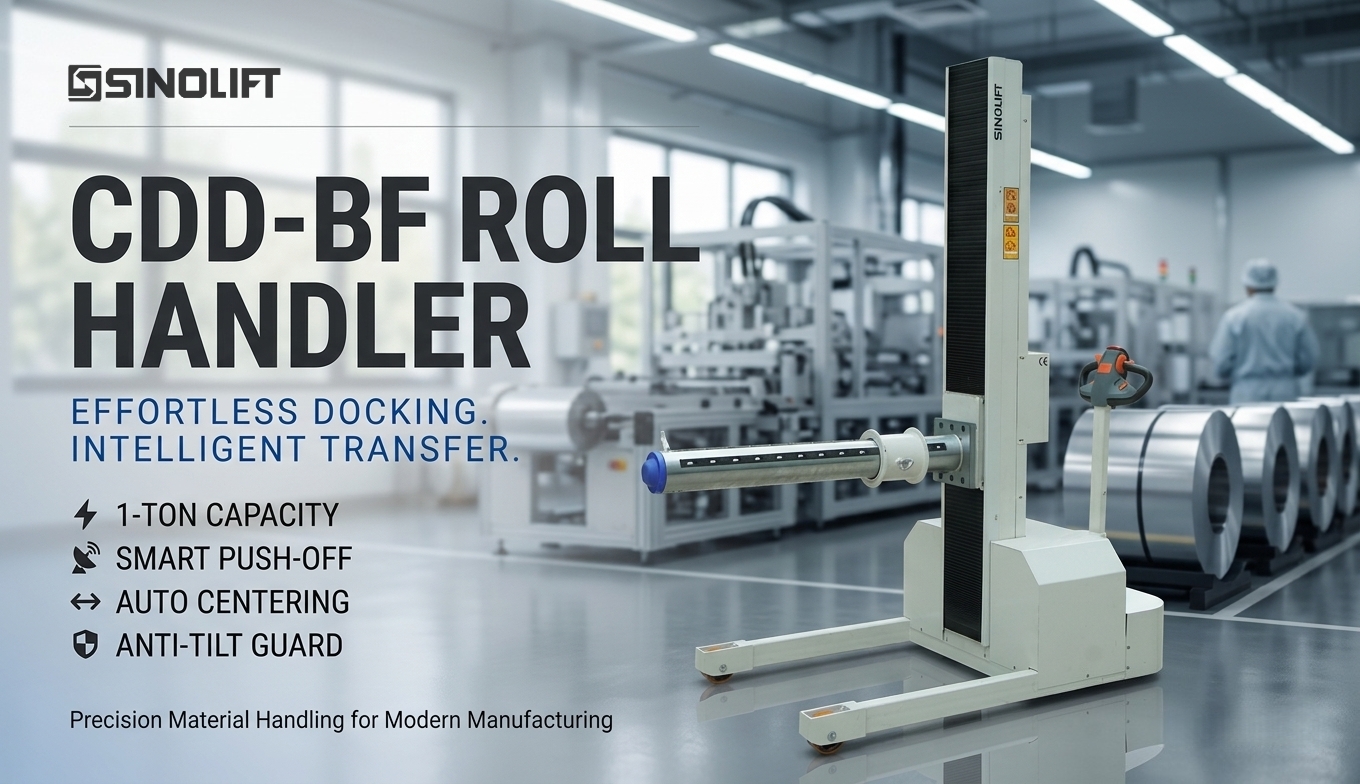
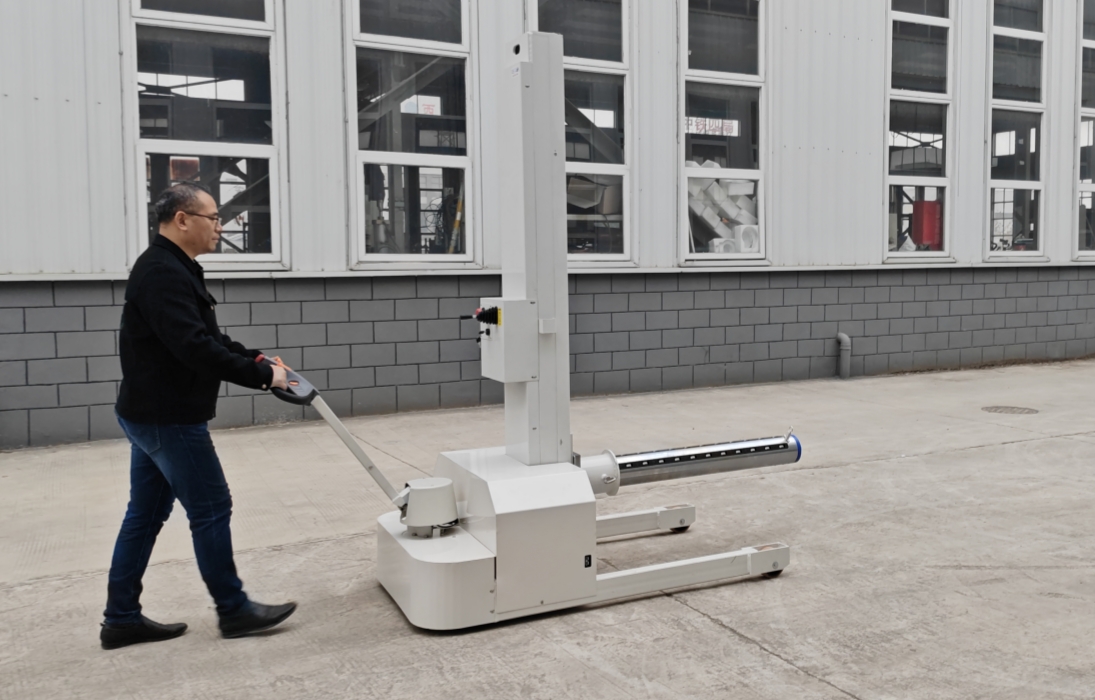
At SINOLIFT, we understand the exact pressures of high-value manufacturing. We have engineered our equipment to solve these specific industrial bottlenecks. The CDD-BF Electric Roll Handler with Push-Off is our definitive answer to the challenges of modern roll transport.
The CDD-BF is a 1-Ton Single Ram Walkie Stacker designed from the ground up for precise material docking. It features a compact, single-mast structure that maximizes operator visibility. The fully electric lifting and traveling capabilities ensure that a single worker can manage massive loads smoothly and safely.
We incorporated a highly accurate electric push-pull system directly into the design. Paired with our intelligent control handle, the CDD-BF guarantees seamless material transfer to your existing coating and slitting equipment. It operates with a smooth hydraulic drive that eliminates the jerking motions that cause material damage.
Navigating a busy factory floor is effortless. The machine features wear-resistant PU (polyurethane) wheels. These wheels provide excellent traction and quiet operation. They are perfectly suited for maneuvering through the narrow aisles and tight corners common in modern lithium battery plants.
Elevating Your Production Logistics
Your production line is only as fast as your material supply. Relying on outdated manual methods or improper warehouse equipment slows you down. It puts your expensive raw materials at risk.
Investing in a specialized electric roll handler is an investment in your overall production quality. It lowers your scrap rates. It protects your workforce from strain and injury. It ensures that your highly expensive copper and aluminum foils arrive at the coating machine in perfect condition, every single time. By matching the right expanding shaft technology with precise hydraulic docking, you create a safer, faster, and more profitable manufacturing environment.
For professional product selection guidance or technical support, our expert team is at your service:
Contact Information:
✉ Email: shanghai@sinoliftcorp.com
☎ Phone/WhatsApp: +86 13918731490
We provide:
• Customized equipment recommendations
• Detailed product specifications
• On-site technical consultation
• After-sales support
Get your tailored material handling solution today!
4 Proven Ways to Reduce Forklift Downtime in Your Warehouse
Taming Corrosive Environments: The Essential Guide to the Stainless Steel Pallet Truck