How Does a Walkie Stacker Work?
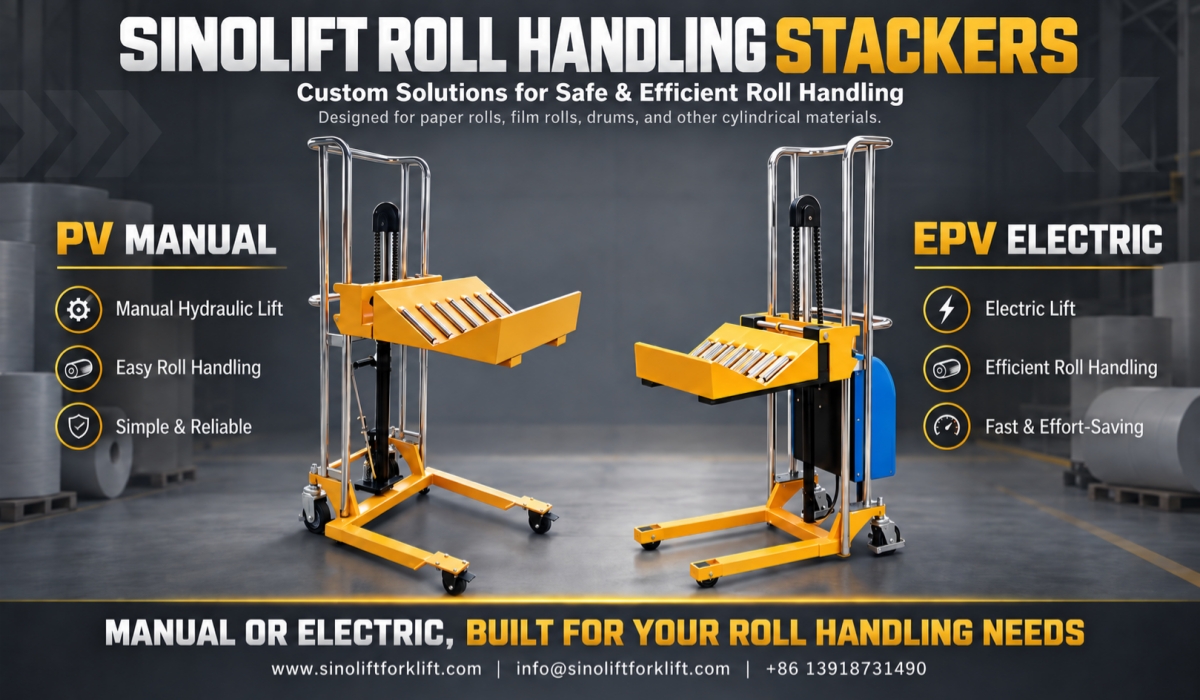
Walkie stackers are versatile lifting machines available in manual or powered versions. How they are operated varies accordingly.
In manual walkie stackers, an operator must push the machine while raising or lowering its forks using a foot pedal or handle. A separate trigger releases the pressure and lowers the forks.
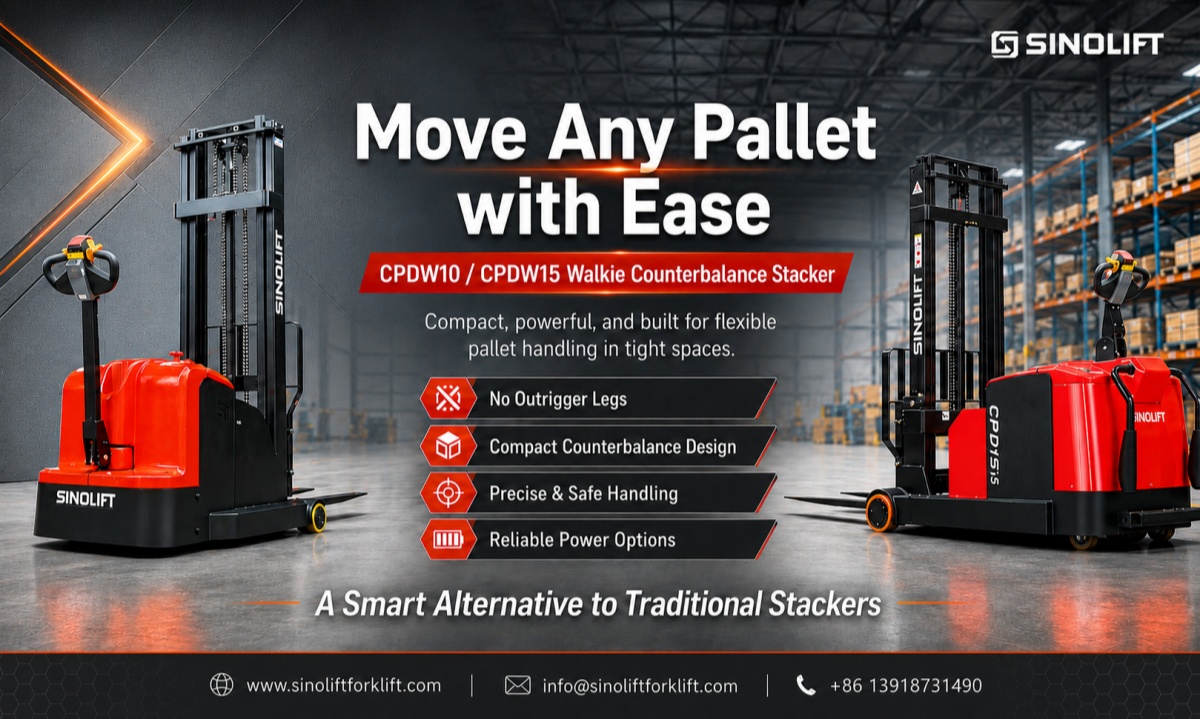
Powered walkie stackers use gas or electricity, offering greater load capacities. A driver can raise and lower the forks using a button and use controls on the handles to move the lift forward or backward.
It is crucial for an operator to read the walkie stacker forklift operating manual to ensure safe use.
Types of Walkie Stackers
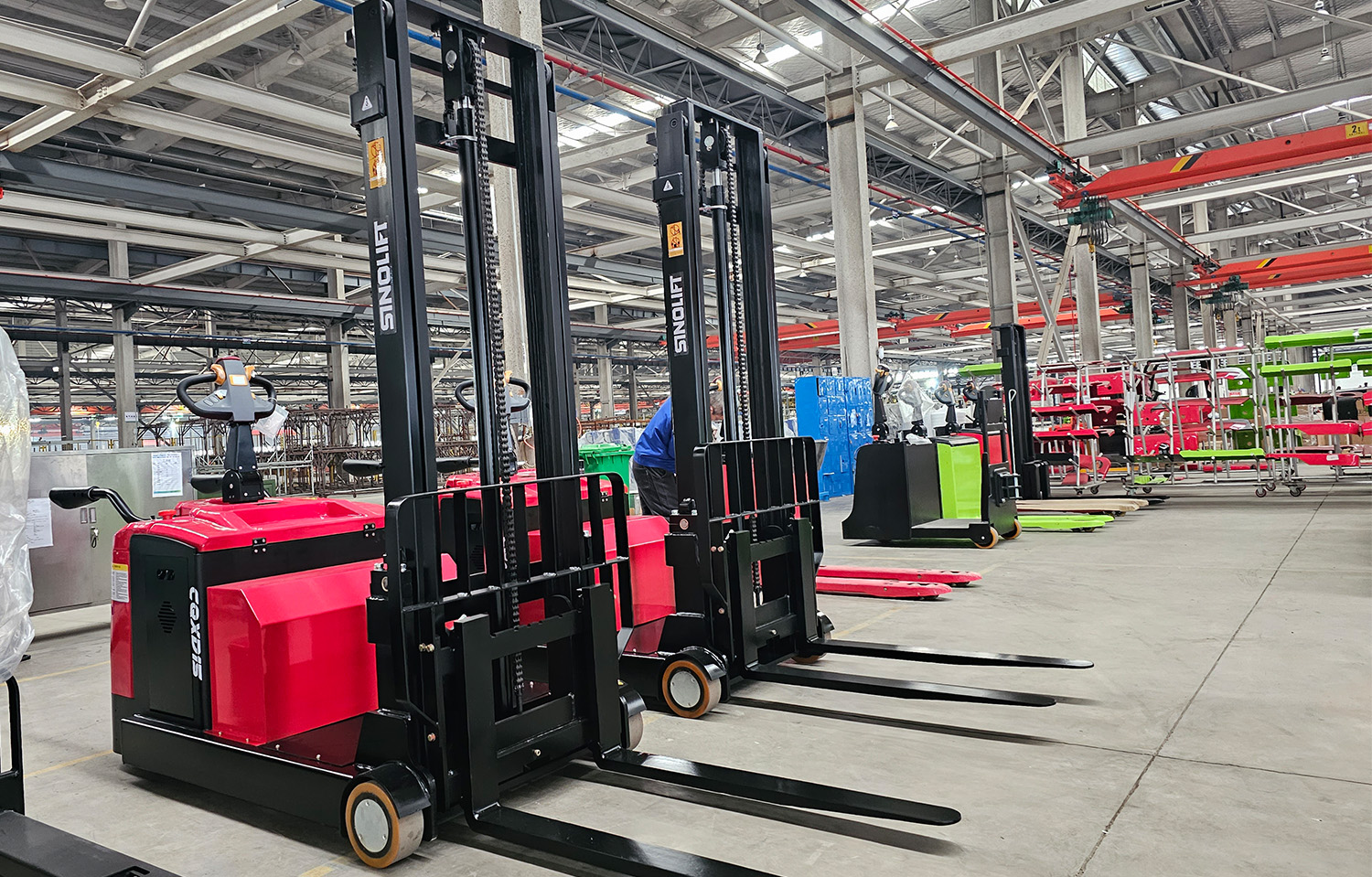
There are five types of walkie stacker forklifts. Walkie straddle stackers feature straddle legs, while walkie reach stackers have a pantographic scissor mast. Ride-on walkie stackers have controls for the operator to use, and counter-balance walkie stacker forklifts have a counter-balance weight. Standard walkie stackers have legs beneath their forks.
Benefits of a Walkie Stacker Forklift
Businesses choose walkie stackers for their affordability, easy maneuverability in tight spaces, and lack of certification needed for operators. A walkie stacker forklift is usually better in store rooms or small warehouses, thanks to their compact chassis, ease of operation, and full visibility of surroundings.
Comparatively, traditional forklifts can be used outdoors, lift heavier loads, and are useful in industrial work environments.
It helps to assess all options before choosing a lift to maximize return on investment.
How to Operate an Electric Pallet Jack
What are the Different Types of Heavy Lifting Equipment?