Can You Tow with a Forklift? A Comprehensive Guide to Safety and Solutions
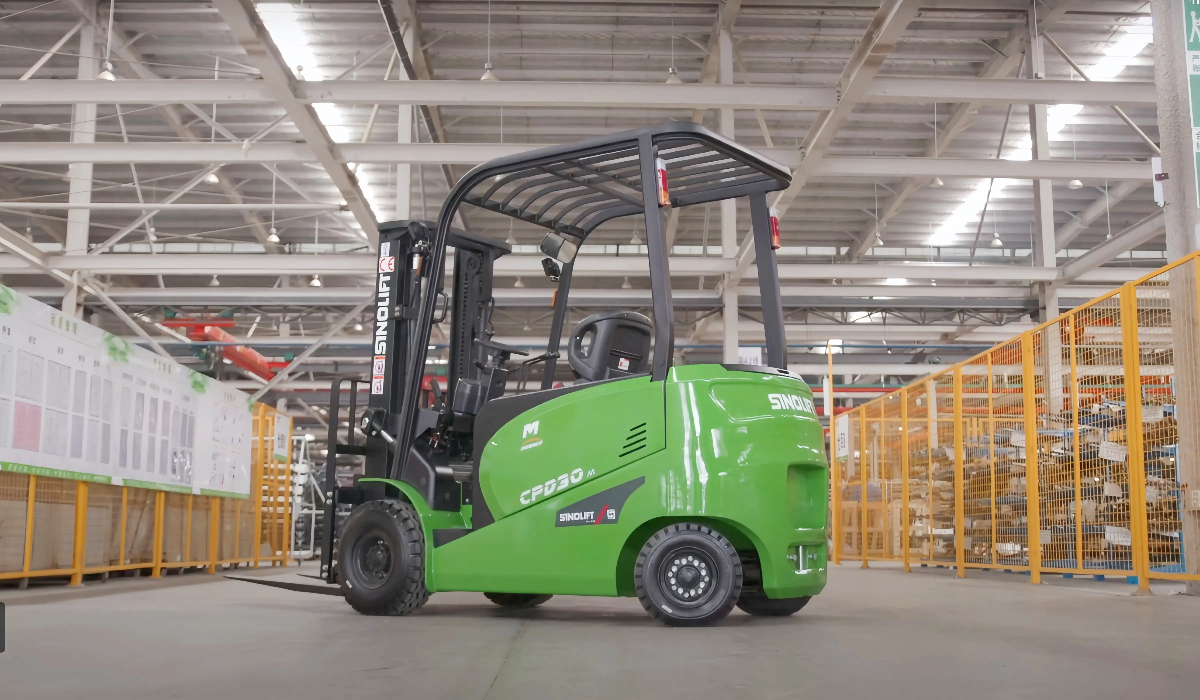
Forklifts are the undisputed workhorses of warehouses, construction sites, and manufacturing plants worldwide. Their ability to lift and transport heavy loads with precision has made them an indispensable tool for modern industry. Given their power and versatility, a common question arises in many workplaces: can a forklift be used to tow a trailer or move a vehicle?
The short answer is a firm and resounding no—a standard, unmodified forklift is not designed for towing and should not be used for this purpose. However, the conversation doesn't end there. Under very specific circumstances and with the correct, professionally engineered attachments, a forklift can be adapted for limited, short-distance towing tasks.
This comprehensive guide will explore the critical safety reasons why towing with a standard forklift is dangerous, explain the proper use of specialized towing attachments, and identify which applications can benefit from this expanded capability.
The Fundamental Risks: Why Standard Forklifts and Towing Don't Mix
To understand the prohibition against makeshift towing, we must first look at the fundamental design and engineering principles of a forklift. These machines are purpose-built for one primary function: lifting and lowering loads vertically using their front-mounted forks. Every aspect of their construction, from weight distribution to steering and braking, is optimized for this task. Introducing a horizontal pulling force—towing—disrupts this delicate balance and introduces significant, often severe, risks.
1. Unstable by Design: Weight Distribution and Steering Dynamics
The most critical factor is the forklift's steering and stability system. Most forklifts utilize rear-wheel steering. This design provides exceptional maneuverability in tight spaces, allowing the forklift to pivot sharply. However, when towing, this becomes a liability. The towed load's weight and momentum exert a sideways force on the rear of the forklift, which can easily overwhelm the steering axle. This can lead to a loss of control, causing the forklift and its load to jack-knife or swing uncontrollably.
Furthermore, a forklift's center of gravity is engineered to be counterbalanced by a heavy weight at the rear, allowing it to safely lift heavy loads at the front. When you tow, you are applying a force that can lift or shift the weight off the rear steering wheels, drastically reducing traction and the operator's ability to control the vehicle's direction.
2. Inadequate Braking Capacity
Forklift braking systems are typically located on the front, non-steering wheels. They are designed to stop the weight of the forklift itself plus a rated load carried properly on the forks. They are not engineered to handle the additional, often unpredictable, momentum of a towed vehicle or trailer. A heavy towed load can push the forklift forward, overwhelming the brakes and making it impossible to stop safely, especially on a slight incline or slippery surface. This creates a high risk of collision and accidents.
3. The Forks Are for Lifting, Not Pulling
The forks of a forklift are marvels of material engineering, designed to withstand immense downward pressure. They are not designed to handle the shearing and tensile stress of a horizontal pulling force. Attempting to tow by wrapping a chain or rope around the forks can cause them to bend, crack, or become misaligned. Damaged forks are not only expensive to replace but also critically compromise the forklift's primary function. An uneven or weakened fork can lead to unstable loads and create a serious tipping hazard during future lifting operations.
4. The Misleading "Tow Pin"
Many forklifts have a pin or hook integrated into their rear counterweight. This often leads to the misconception that the forklift is equipped for towing. This is incorrect. This hook is exclusively a towing point for the forklift itself. Its purpose is to allow a suitable recovery vehicle (like a proper tow truck) to move the forklift when it is disabled, needs maintenance, or requires assistance. Using this pin to tow another object can damage the forklift's chassis and is an unsafe practice explicitly forbidden by manufacturers.
The Conditional "Yes": Safe Towing with Specialized Attachments
While using a standard forklift for towing is off-limits, the industry has developed solutions for businesses that need this capability for specific, on-site tasks. These solutions come in the form of specially designed forklift attachments that transform the machine into a limited-use tow vehicle.
Before even considering an attachment, the first step is crucial: consult the forklift's manufacturer guidelines. Many forklifts, particularly smaller models, may not be approved for any towing application, even with an attachment. Always verify the machine's structural capacity and any restrictions.
There are two primary types of towing attachments:
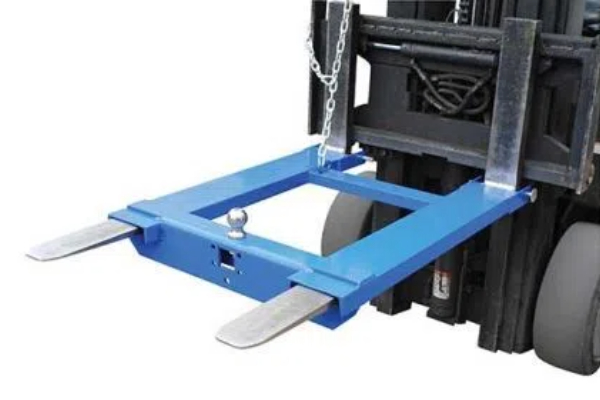
1. Forklift Towing Hitch Attachments
This is the most common type of attachment. It typically consists of a sturdy steel sleeve that slides directly over both forks and is secured with a safety chain or pin to the forklift's carriage. At the end of the attachment is a standard tow ball or a pintle hook.
- Use Case: Ideal for towing trailers, mobile equipment, or material carts over short distances on a level, paved surface, such as within a factory complex, a large warehouse, or a yard.
- Safety Check: It is vital to ensure that the total weight of the trailer and its cargo does not exceed the maximum towing capacity specified for both the attachment and the forklift itself.
2. Forklift Car Mover / Wheel Lift Attachments
For moving vehicles, a more specialized attachment is required. A forklift car mover, sometimes called a "forklift wrecker," functions much like the wheel lift on a traditional tow truck. It slides under the front or rear wheels of a vehicle, and hydraulic or mechanical arms clamp onto the wheels. The forklift then lifts that end of the vehicle off the ground for transport.
- Use Case: This is the ideal solution for service garages, impound lots, junkyards, and car auction sites. It allows for the efficient movement of vehicles that may not be operational, lack keys, or are damaged.
- Advantage: Because it lifts the vehicle rather than simply pulling it, it puts less strain on the forklift's drivetrain and brakes. It also prevents damage to the towed vehicle's transmission or bumpers.
Practical Applications: Where Forklift Towing Makes Sense
When used correctly with the proper attachments, forklift towing is an affordable and efficient solution for various niche applications, eliminating the need for a full-sized, expensive tow truck for on-site jobs.
- Automotive Service Garages: Mechanics can easily shuffle cars between parking spots and service bays without having to start each vehicle, saving time and maximizing lot space.
- Impound and Repo Lots: Moving a constant influx of non-running vehicles becomes simple. An operator can quickly organize the lot or pull a specific car from a tight spot.
- Junkyards and Salvage Operations: A wheel lift attachment is invaluable for moving damaged vehicles around the yard, as it only requires two functional wheels on a single axle.
- Marinas and Boat Storage: A forklift with a tow hitch can easily move boats on trailers from st
orage units to launch prep areas.
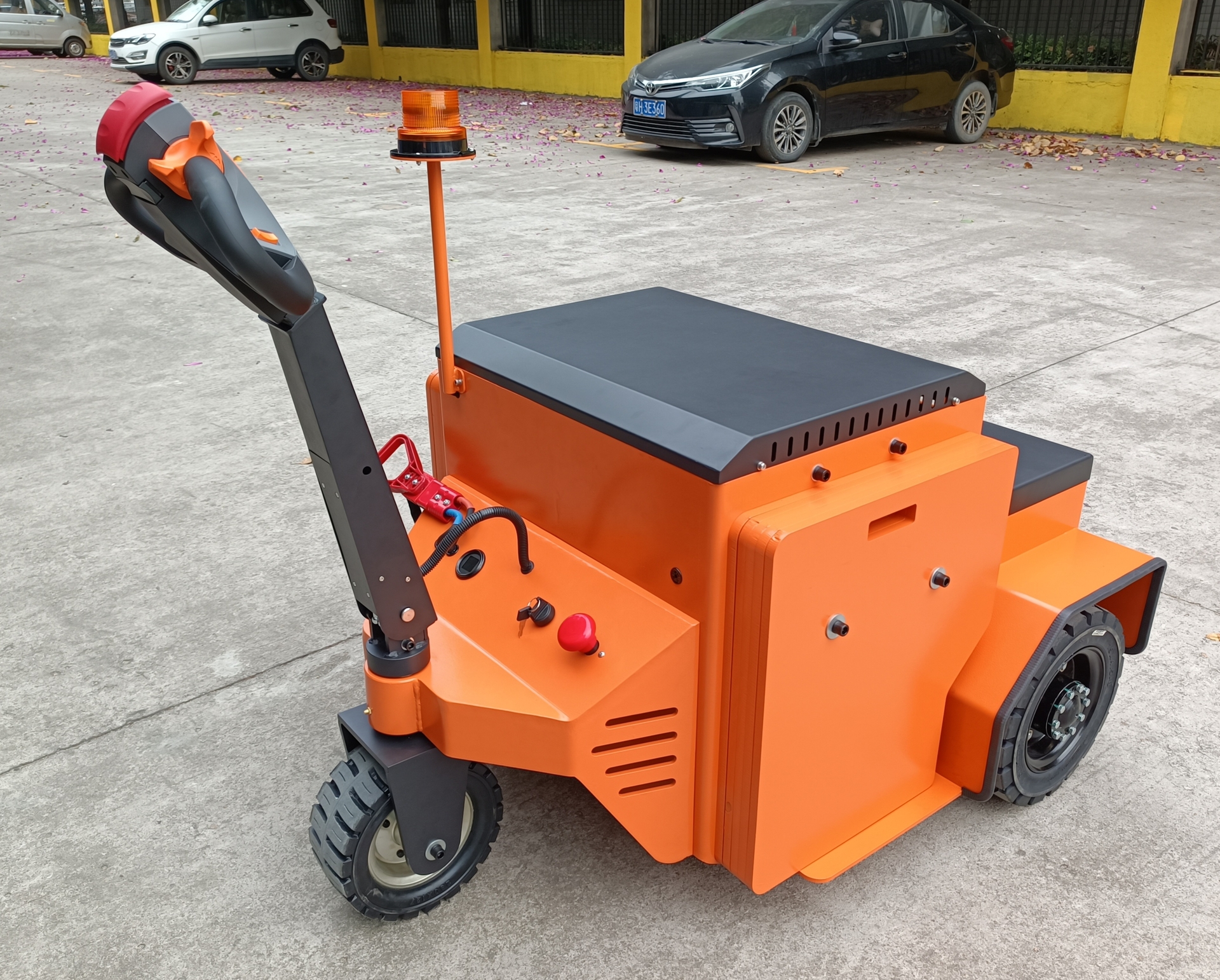
Alternatives: Professional Towing Equipment
While a forklift can be adapted for limited towing under specific circumstances with the right attachments, it's crucial to remember that a forklift is not an ideal towing vehicle. Frequent or overloaded towing can lead to safety incidents and equipment damage.
For maximum safety and efficiency, we highly recommend prioritizing specialized equipment designed specifically for towing tasks. A professional tow tractor provides more stable and controlled towing capabilities while significantly reducing operational risks and protecting your machinery.
Recommended Products: ML1500L, ML2000L, ML3000L Heavy Duty Tow Tractors
Our ML3000L Tow Tractor is simple and easy to use, offering towing capabilities of up to 30,000 kg. A single operator can safely maneuver this Tow Tractor and connect securely to any load in seconds—no operator license required.
Ergonomically designed, this electric Tow Tractor enhances safety and efficiency across diverse environments and terrains. Compact yet powerful, it is fully customizable to optimize performance in your workplace. Various couplings, safety features, and machine options are available to meet your specific needs.
Our tow tractors are so powerful they can even move two large trucks at once! Click here to watch the video and see its power for yourself.
For professional product selection guidance or technical support, our expert team is at your service:
Contact Information:
✉ Email: shanghai@sinolift.com
☎ Phone/WhatsApp: +86 139 1873 1490
We provide:
• Customized equipment recommendations
• Detailed product specifications
• On-site technical consultation
• After-sales support
Get your tailored material handling solution today!
Power Up Your Operations: The 6 Transformative Advantages of Electric Pallet Trucks
10 Crucial Tips to Stop Forklifts From Damaging Pallets