How to Choose a 300 kg Paper Roll Lifter for Printing and Packaging: Electric vs. Manual
How to Choose a 300 kg Paper Roll Lifter: Electric vs. Manual
A practical comparison for printing, packaging and converting workshops—covering lifting method, workflow, fit, safety and the information needed for an accurate quotation.
Which 300 kg paper roll lifter should you choose?
A 300 kg paper roll lifter is a practical choice for lifting and moving compatible paper rolls, film rolls and other cylindrical materials in printing, packaging and converting workshops.
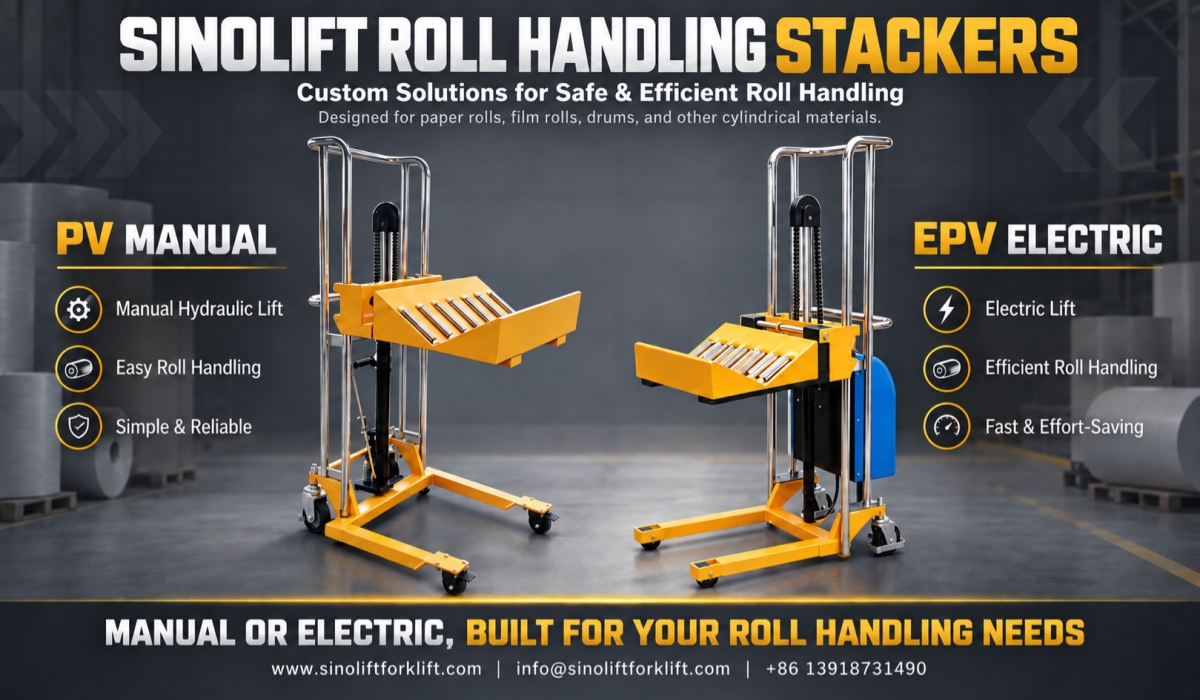
For occasional lifting, a manual hydraulic model such as the SINOLIFT PR4080-80 offers foot-pedal operation without a battery. For frequent roll changes, the EPR4080-080 provides push-button electric hydraulic lifting to reduce repeated pumping effort.
Both models have a 300 kg rated capacity and are manually pushed and steered. Before choosing, check the roll dimensions, required lifting height, machine access, floor conditions and handling frequency. Final equipment selection should always be confirmed against the actual application.
Key takeaways
- Electric or manual lifting: EPR4080-080 uses battery-powered hydraulic lifting; PR4080-80 uses a foot pedal.
- 300 kg rated capacity: Both models stay within their rated load only when the roll is properly supported and stable.
- Low-level lifting: Both specification sheets indicate an upper platform height of 810 mm.
- Manual travel: Neither model has a powered travel drive.
- Fit matters: Roll dimensions, loading height, clearance and transfer method must be checked before ordering.
Why is paper roll handling difficult?
Paper and film rolls are difficult to move not only because of their weight, but also because of their cylindrical shape.
In a printing workshop, operators may need to collect a roll from storage, move it across the workshop, raise it to the correct working height and transfer it to a machine. Without suitable equipment, workers may have to lift, push or repeatedly reposition awkward cylindrical loads.
This creates physical demands and makes controlled positioning more difficult, particularly where access is limited. The UK Health and Safety Executive identifies lifting, carrying, pushing and pulling as important manual-handling concerns in printing operations. Its manual handling guidance for printing recommends suitable mechanical aids and workplace adjustments.
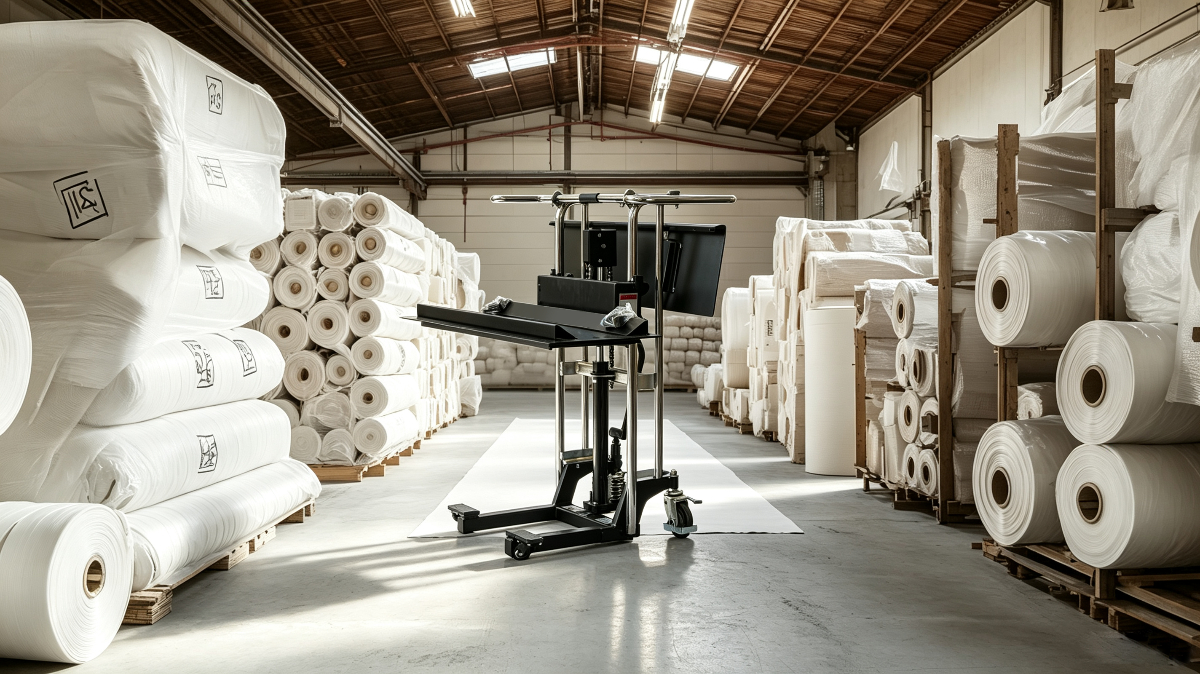
A mobile roll lifter supports the roll on a platform and lets the operator change its height hydraulically. Capacity alone is not enough: the lifter must also fit the roll, receiving machine and travel route.
How do the electric and manual paper roll lifters work?
The SINOLIFT EPR4080-080 and PR4080-80 assist with lifting, positioning and transporting compatible cylindrical materials. Both use hydraulic lifting, roll-supporting platforms, chrome-plated mast structures and swivel casters. The main difference is how lifting force is generated.
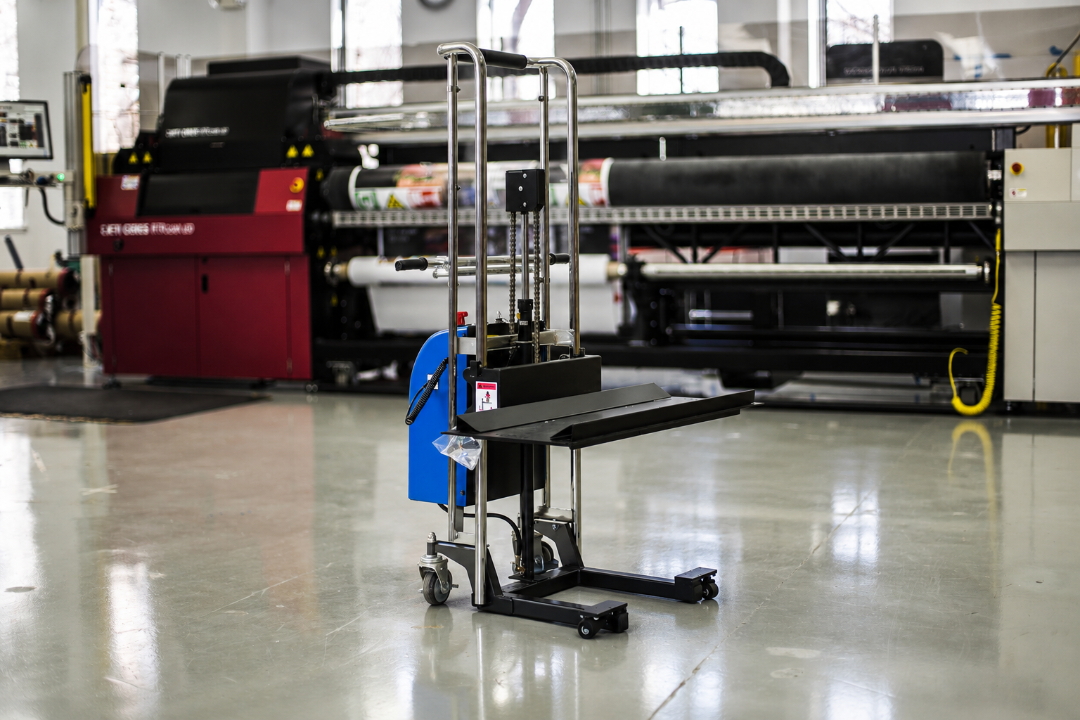
EPR4080-080
A 12 V battery-powered hydraulic pump raises the platform. Push-button control is convenient for repeated height adjustments; travel remains manual.
View electric product →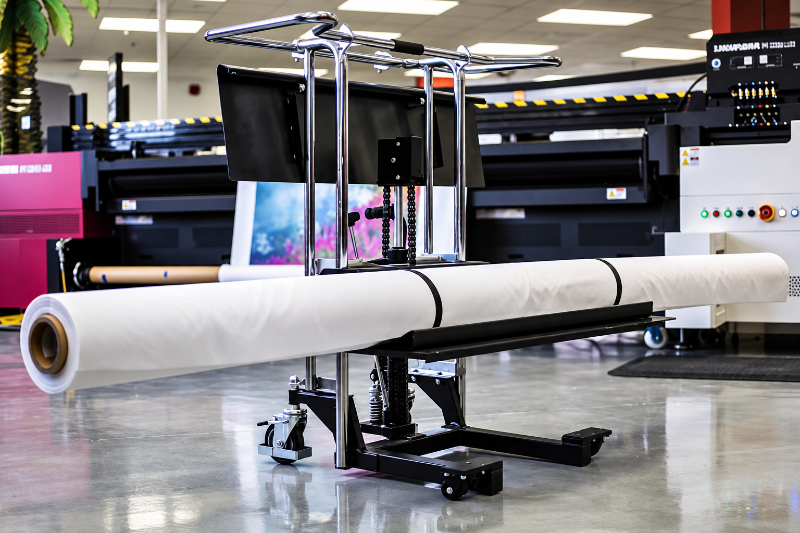
PR4080-80
An extended foot pedal generates hydraulic pressure to raise the platform. No battery, charger or electric lifting motor is required.
View manual product →Electric vs. manual: main differences
| Selection factor | EPR4080-080 electric | PR4080-80 manual |
|---|---|---|
| Rated load | 300 kg | 300 kg |
| Lifting method | Push-button hydraulic lift | Foot-pedal hydraulic lift |
| Power supply | 12 V battery | No electrical power required |
| Travel | Manual pushing | Manual pushing |
| Upper platform height | 810 mm listed | 810 mm maximum |
| Typical consideration | Repeated lifting tasks | Occasional lifting tasks |
Both configurations can serve similar applications when the load and workstation dimensions are compatible. The electric version reduces repeated pedal operation, while the manual version avoids charging requirements. The right choice depends mainly on lifting frequency and the complete handling task.
How does a typical paper roll transfer work?
A roll lifter helps the operator collect, move, raise and position a roll. The exact transfer procedure depends on the roll support and receiving machine.
-
Check the roll and equipment
Verify weight, outside diameter, width and condition. Confirm stable support and inspect the hydraulic system, wheels, brakes and controls.
-
Position the roll on the platform
Move the lifter to the pickup location, center the roll and make sure it is stable. Use a different attachment if the standard support is not suitable.
-
Move the roll to the workstation
Keep the load at a safe transport height and manually push the trolley along an approved route with enough space for steering, turning and stopping.
-
Adjust the lifting height
Raise the roll using the electric push buttons or manual foot pedal, then check alignment with the receiving equipment.
-
Complete the transfer
Secure the trolley against unintended movement and follow the receiving machine’s procedure. Matching platform height alone does not guarantee direct loading.
Where are 300 kg paper roll lifters commonly used?
These compact lifters are most relevant where cylindrical materials move between nearby workstations and must be raised to relatively low working heights.
Collect paper rolls from storage and position them near printing or finishing equipment when the machine height and support arrangement are compatible.
Support material changes and preparation. Electric lift suits repeated adjustments; manual lift suits less frequent roll changes.
Transfer compatible cylindrical materials among low storage positions, worktables and production stations with suitable surface and core support.
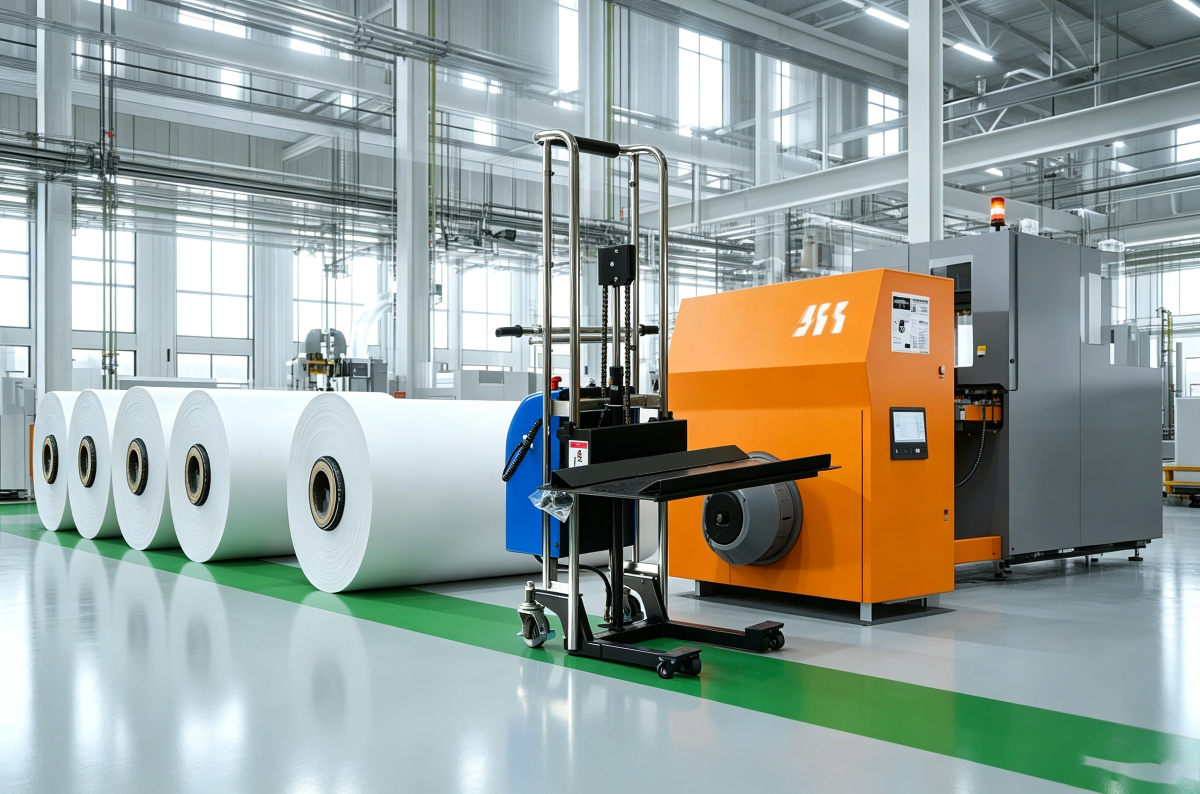
Applications requiring internal core gripping or controlled rotation may need a different solution, such as a mandrel lifter. Review the SINOLIFT roll and reel handling equipment range when the standard platform does not provide the required function.
Six factors to check before choosing
Actual roll weight and load distribution
Include shafts and accessories in total load weight. Width, orientation, contact point and center of gravity also affect support; a load below 300 kg is not automatically suitable.
Roll diameter, width and support geometry
A 450 mm roll diameter is listed or illustrated in the specifications, but it should not be treated as a confirmed range for every application. Provide minimum and maximum dimensions.
Required pickup and loading height
Both models list an 810 mm upper platform height; the manual specification also lists an 88 mm minimum. Measure the actual receiving interface, not only the machine’s overall height.
Machine access, aisle and floor
The listed 687 mm base width does not establish the full operating aisle. Check overall dimensions, turning clearance, operator space, obstructions, floor condition and slopes.
Lifting frequency and work pattern
Electric hydraulic lifting can reduce repeated foot-pedal effort during numerous cycles. For occasional lifting, the manual model avoids battery and charging requirements.
Roll orientation and transfer method
Determine whether the roll must stay horizontal, rotate, be gripped through the core or transfer onto a machine shaft. A platform is not a clamp, rotator or expanding mandrel.
Safety and operating limits
A 300 kg rating does not guarantee that a loaded trolley can be pushed safely under every site condition. The roll must be properly supported, the route suitable and the equipment used in its approved configuration.
- Keep loads within rated capacity and maintain stable support.
- Check wheels, brakes, hydraulic components and controls before use.
- Keep hands and feet clear of moving parts and pinch points.
- Use firm, level floors; avoid unapproved ramps, slopes and obstacles.
- Engage the wheel brakes when stationary for loading or unloading.
- Follow the receiving machine’s procedure; never use the lifter to raise personnel.
Electric models also require appropriate battery inspection, charging and electrical maintenance. Final procedures and restrictions must follow the manufacturer’s instructions and the site risk assessment.
What information should you provide?
A useful quotation starts with the actual handling task, not only the lifting capacity. Prepare:
- Roll details: maximum/minimum weight, outside diameter, width, material, core size and intended support method.
- Working heights: pickup height, loading height and receiving interface dimensions.
- Workplace conditions: aisle width, turning space, route length, floor condition, slopes and obstacles.
- Operating frequency: lifting cycles per shift, travel frequency and preferred electric or manual operation.
- Supporting material: photos or video of the workstation and drawings showing the loading position.
Also explain whether the roll transfers directly onto a shaft, lifts from the floor or is positioned beside a production machine. Special configurations must be confirmed against approved technical drawings.
Choose the lifter that fits the complete process
The right 300 kg roll lifter should match the load, working height, available space and frequency of use. EPR4080-080 offers battery-powered hydraulic lifting for repeated handling, while PR4080-80 provides a manual hydraulic alternative where powered lifting is not needed.
Both models are manually maneuvered, so access, floor conditions and roll stability remain essential. Send SINOLIFT your roll weight, diameter, width, lifting height, aisle dimensions, handling frequency and workstation photos or drawings for an application review.
Frequently asked questions
1. What is the difference between an electric and a manual paper roll lifter?
An electric model uses a powered hydraulic system to raise and lower the platform, while a manual model requires the operator to generate hydraulic pressure using a pedal or hand pump. Both SINOLIFT models in this guide are manually pushed and steered; their main difference is the lifting method.
2. Can a 300 kg lifter handle different roll diameters and widths?
Capacity indicates the specified load limit but does not guarantee compatibility with every shape or size. Roll diameter, width, center of gravity and contact with the support must also be checked. Supply actual dimensions for confirmation before ordering.
3. Can these models load rolls directly onto printing machines?
They can support suitable loading tasks when lifting range, platform design and access match the receiving equipment. Direct transfer onto a machine shaft is not guaranteed by height alone. Provide drawings or photos of the shaft position, loading direction and surrounding clearance.
4. Which model is more suitable for frequent roll changes?
The electric hydraulic model is generally more convenient for repeated raising and lowering because push-button control reduces repeated pumping. The manual model remains practical for less frequent lifting where charging is not preferred.
5. What floor conditions are suitable?
Use firm, stable and suitably level floors that let the wheels move without excessive resistance. Damaged floors, steep slopes, wet surfaces and obstacles can make loaded equipment difficult to maneuver or stop.
6. What does SINOLIFT need to recommend a roll lifter?
Provide maximum roll weight, outside diameter, width, lifting height, handling direction and receiving equipment. Aisle width, travel distance, lifting frequency, floor conditions and charging arrangements are also useful. Photos or drawings help verify whether a standard or special solution is required.
Not sure which model fits your roll and machine?
Send your roll dimensions, required height, aisle width and workstation photos. Contact SINOLIFT directly for an application review and quotation.
Email opens a pre-addressed Gmail compose window. WhatsApp opens the direct SINOLIFT chat.
Compact BESS Battery Handling Equipment for Retrofit Installation Sites